Chapter 1 · The Delta Electrified
Muddy Waters
The Father of Electric Blues · Chicago · 1940s–1950s
Rock & Roll Hall of Fame, 1987“My blues look so simple, so easy to do, but it's not. They say my blues is the hardest blues in the world to play.”
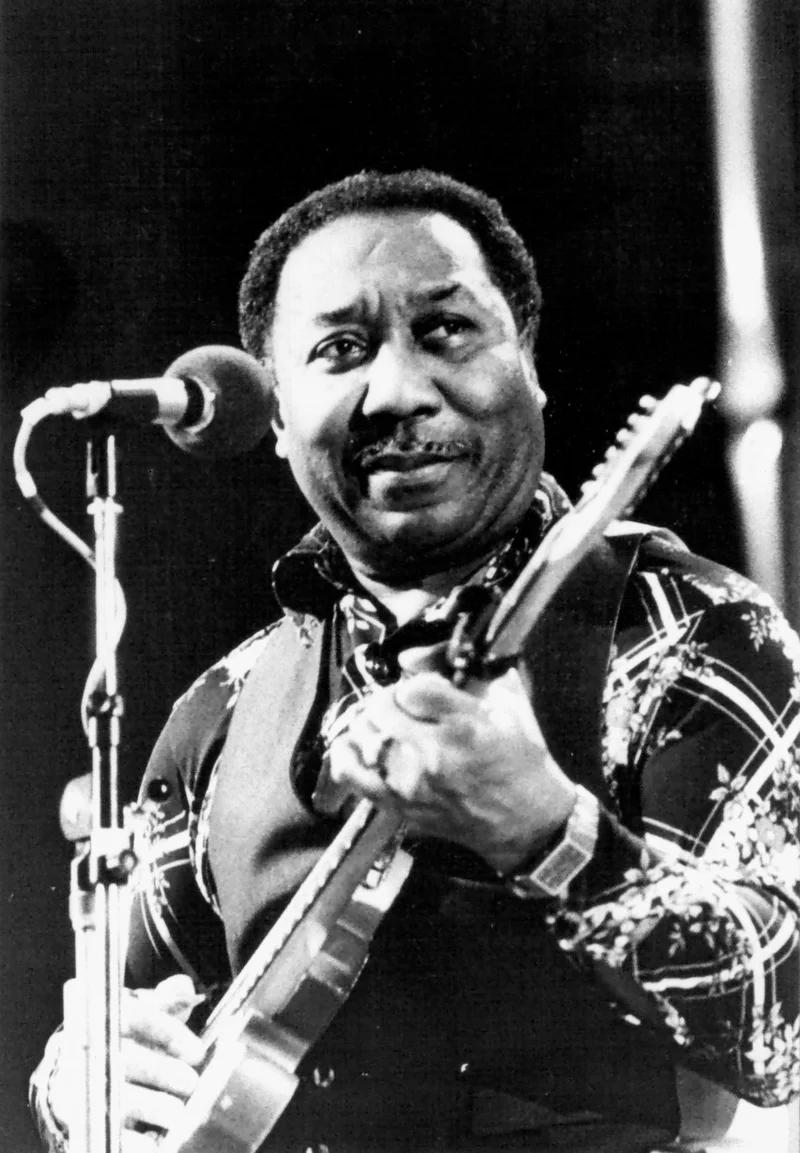
Muddy Waters performing, November 1976 — photo by Lionel Decoster, licensed CC BY-SA 4.0
The Story
When McKinley Morganfield left the Mississippi Delta for Chicago's South Side in 1943, the noisy clubs forced him to plug in. Running his slide guitar through an overdriven tube amp, he turned rural acoustic blues into an aggressive, electrified pulse — and in doing so, fathered modern electric rock.
Waters' sound was Delta country blues electrified, but his use of microtones in both vocals and slide playing made it nearly impossible for other musicians to duplicate. Without Muddy Waters, there is no Rolling Stones (the band literally took its name from his song), no Led Zeppelin, and no British blues explosion.
Sound & Gear Breakdown
- Heavy, overdriven tube-amp slide guitar
- Driving 12-bar Chicago blues shuffle
- Raw, unvarnished vocal delivery with microtonal bends
Essential Listens
Rollin' Stone (1950)
The acoustic-to-electric bridge track that gave a magazine and a legendary British band their names.
Mannish Boy (1955)
One of the most recognizable, heavy stop-time riffs in music history.
Legacy Impact
Directly mentored the British Invasion generation; without Muddy, neither hard rock nor heavy metal exists in the form we know.
Lineage to Today
Every band we book that leans into a slow, heavy blues shuffle is running Muddy's DNA — the volume and grit he plugged in are still the baseline for how we mic and mix guitar on a live stage today.