Chapter 1 · The Delta Electrified
Sister Rosetta Tharpe
The Godmother of Rock and Roll · Gospel Circuit to Decca Records · 1938–1957
Rock & Roll Hall of Fame, 2018 — Early Influence Award“All this new stuff they call rock 'n' roll, why, I've been playing that for years now.”
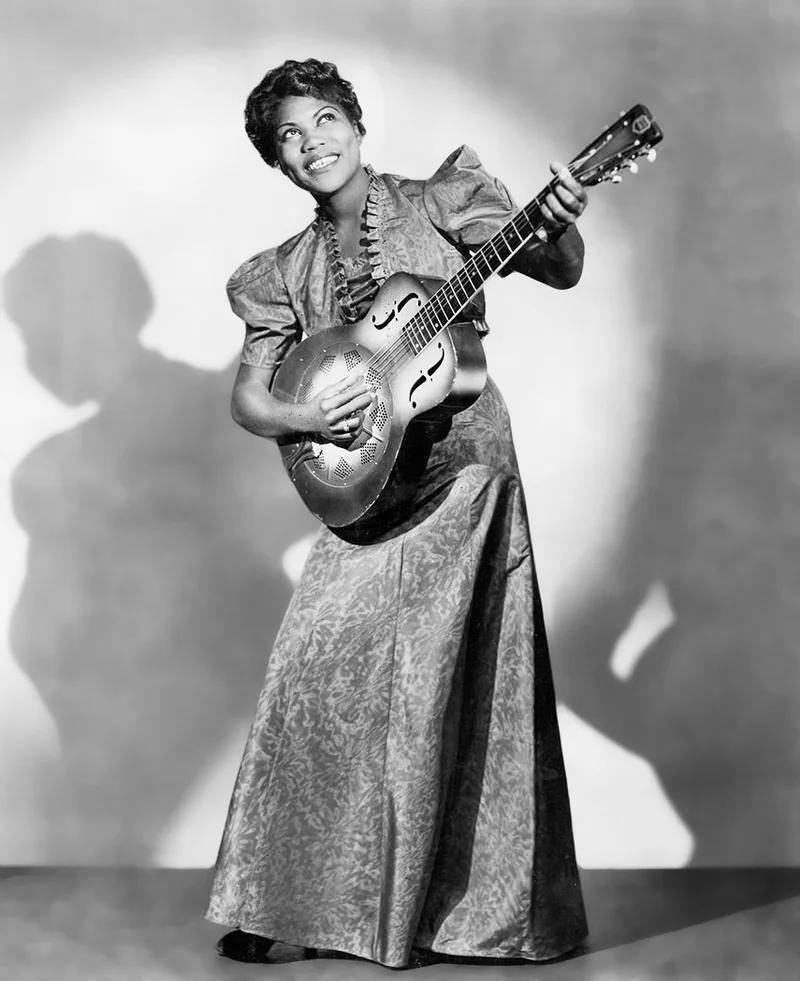
1938 Decca Records publicity photo — public domain (US)
The Story
Armed with a Gibson guitar and an overdriven amp, Sister Rosetta Tharpe was shredding gospel spirituals with distortion, string bends, and blistering single-note runs nearly a decade before Chuck Berry and Little Richard broke through — technique that gospel audiences had never heard from an electric guitar before.
Chuck Berry himself said in his 1986 Hall of Fame induction, "My whole career has been one long Sister Rosetta Tharpe impersonation." Johnny Cash named her as one of his own heroes in his 1992 induction speech. Elvis Presley, Little Richard, and Eric Clapton all cited her as a direct influence.
Sound & Gear Breakdown
- Overdriven electric guitar on gospel material — radical for its time
- Blistering single-note runs and string bends
- Uptempo backbeat built for dancing, not just praying
Essential Listens
Strange Things Happening Every Day (1944)
Widely cited as one of the first rock and roll records to chart nationally — years before the genre had a name.
This Train (1957)
Recorded live in Manchester, England, and later credited with kickstarting the British blues-rock explosion.
Legacy Impact
The direct, acknowledged influence on Chuck Berry, Little Richard, Elvis Presley, and Johnny Cash — inducted into the Rock & Roll Hall of Fame's Early Influence category in 2018, decades after she'd earned it.
Lineage to Today
Tharpe proved a guitar-forward frontperson could come from any genre or background — the same open-genre spirit behind why we book metal tributes and cumbia-adjacent acts on the same circuit as classic rock.